Golf cart F&I: financing, products and training
More buyers are financing golf carts and street-legal LSVs. Here’s how the F&I side works and how to learn it.
Camila VenegasUpdated November 20266 min read
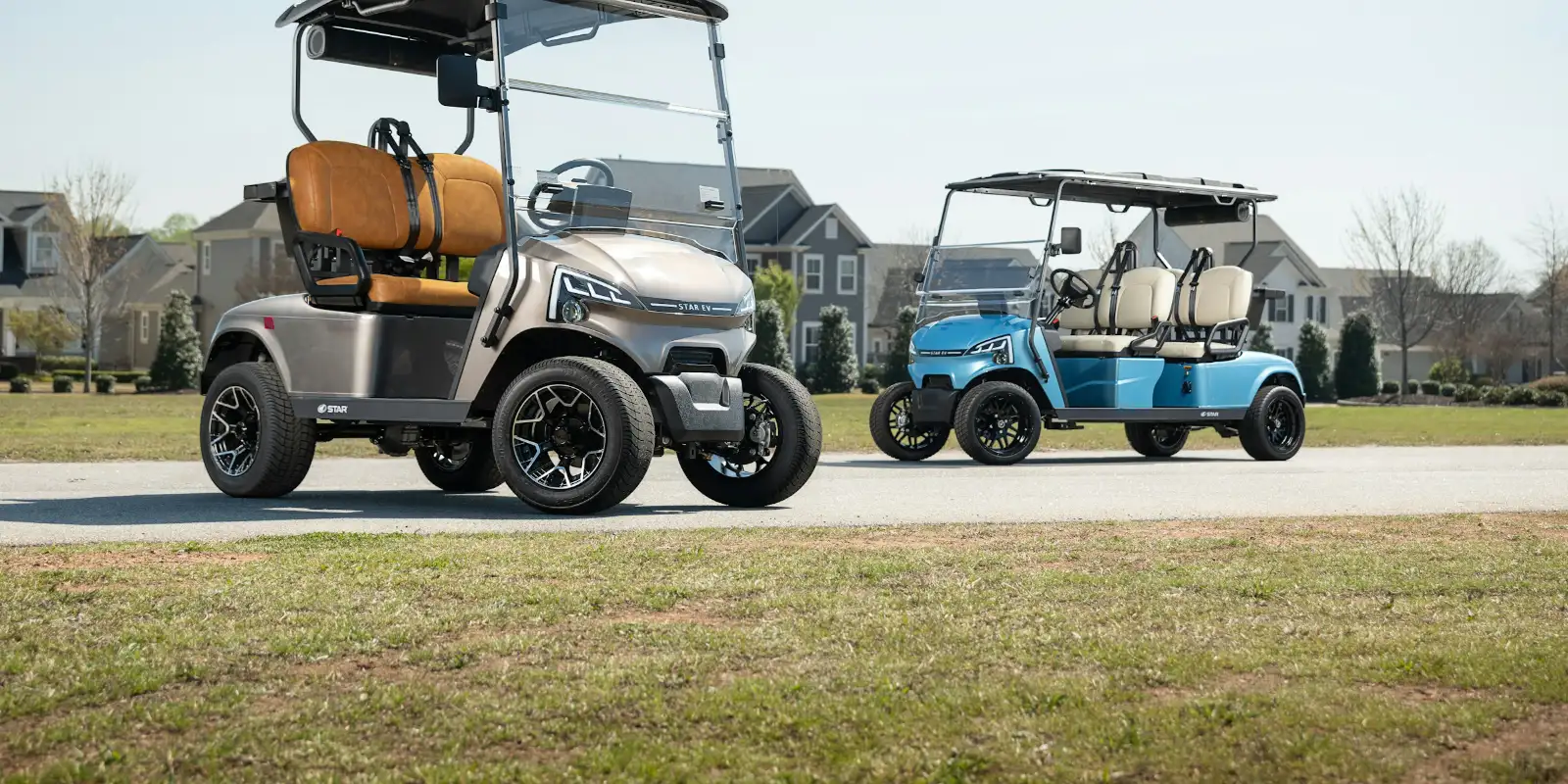
Golf cart F&I is arranging financing and selling protection products, such as service contracts, battery coverage, GAP and tire-and-wheel, at golf cart and LSV dealerships. The process follows auto F&I, but deals use specialty powersports-style lenders, smaller loans, and different title rules, because a federally defined LSV (20 to 25 mph) is titled like a car while many conventional golf carts are not.
What is golf cart F&I?
Golf cart F&I is the finance and insurance side of selling golf carts and low-speed vehicles (LSVs): arranging the customer’s loan, offering protection products like service contracts and battery coverage, and completing the paperwork. As carts have become everyday transportation in many beach towns, retirement communities and suburbs, more buyers finance them, and more cart dealers need someone who can run a real F&I process.
If you already know auto or powersports F&I, most of the skills carry over. The big differences are the vehicle’s legal status, the lenders and the products.
Golf cart vs. LSV: why it changes the deal
Under federal rules, a low-speed vehicle is a four-wheeled motor vehicle that can reach more than 20 mph but no more than 25 mph and is built to NHTSA’s FMVSS No. 500 safety standard. A conventional golf cart that can’t go over 20 mph is generally not a “motor vehicle” under federal law. That difference drives the paperwork:
| Conventional golf cart | Street-legal LSV | |
|---|---|---|
| Top speed | 20 mph or less | Over 20 and up to 25 mph |
| Federal safety standard | Not covered | Must meet FMVSS No. 500 |
| Title and registration | Often none; depends on state and local rules | Usually titled and registered like a car |
| Road use | Golf courses and areas local law allows | Public roads with low speed limits, per state law |
| Typical financing | Personal or powersports-style installment loan | Can be titled collateral, closer to an auto loan |
State and local rules vary a lot. Some states also allow golf carts on certain roads with equipment added. Always check your state DMV.

How golf cart financing works
Golf cart dealers usually work with lenders that specialize in powersports, outdoor equipment or recreational vehicles, plus manufacturer programs, rather than the banks a car dealer uses. Dealer websites commonly list lenders such as Sheffield, DLL, Octane and Dealer Direct, and some manufacturers promote financing through their authorized dealers.
- Credit application. The same core info as a car loan: identity, income, residence and credit history.
- Shorter terms, smaller loans. Loan amounts are lower than cars, so payment math is simpler but margins are thinner.
- Collateral. A titled LSV is easier collateral. A non-titled cart may be financed more like equipment or a consumer installment loan.
- Seasonal buyers. Many lenders and dealers run promotional rates at peak season.
F&I products golf cart dealers sell
| Product | What it covers | Why buyers want it |
|---|---|---|
| Service contract | Mechanical and electrical repairs after the factory warranty | Controllers, motors and chargers are expensive to fix |
| Battery coverage | Battery failure or replacement, depending on the plan | Lithium and lead-acid packs are a big repair bill |
| GAP | The difference between the loan and the insurance payout after a total loss or theft | Carts depreciate and are theft targets |
| Tire and wheel | Road hazard damage to tires and custom wheels | Lifted carts often have premium wheels |
| Appearance protection | Seat, paint and body protection | Outdoor storage and sun damage |
| Theft protection | A benefit if the cart is stolen, by plan terms | Carts are easy to steal from driveways |
Coverage depends on each provider’s contract and state rules. Some states regulate service contracts and GAP differently for non-titled vehicles.
For how each product works in auto F&I, see the F&I products list and tire and wheel protection.
How a golf cart F&I deal differs from auto
- Smaller tickets. A $15,000 cart leaves less room for products, so a clear menu matters more.
- Fewer lenders. Knowing two or three lenders’ programs deeply beats knowing ten loosely.
- More cash buyers. Many buyers pay cash, so products are often sold without financing. Show the cash price for every product.
- Title questions. Customers ask, “Is this street legal?” The answer depends on the cart and the state, so never guess.
Compliance basics still apply
A golf cart loan is still consumer credit. Truth in Lending disclosures, fair lending rules, the Red Flags Rule and the FTC Safeguards Rule for customer data can apply just as they do at a car dealership. Products must be optional and clearly priced. See F&I compliance basics.
Golf cart F&I training: how to learn it
There isn’t a widely recognized certification just for golf cart F&I. The practical path is to learn general F&I (credit, deal structure, lenders, menus and contracting), then learn the specifics of your state’s LSV rules and your store’s lenders and products. Ask each lender rep and product provider for their dealer training, since most offer it free to their dealers. Our Dealership F&I Bootcamp teaches the core F&I process that golf cart, powersports and auto dealers share.
Frequently asked questions
Do golf cart dealers have F&I managers?
Larger golf cart and LSV dealers often do. Smaller stores may have the owner or a sales manager handle financing and products.
Can you finance a golf cart?
Yes. Many dealers offer financing through powersports and specialty lenders, and some manufacturers promote programs through authorized dealers.
Is a golf cart the same as an LSV?
No. Under federal rules an LSV reaches more than 20 and up to 25 mph and meets FMVSS No. 500. Most conventional golf carts are slower and aren’t treated as motor vehicles.
What F&I products are sold on golf carts?
Common ones are service contracts, battery coverage, GAP, tire and wheel, appearance protection and theft protection.
Is there golf cart F&I training?
There is no widely known golf cart-only certification. Learn general F&I first, then your state’s LSV rules and your lenders’ and providers’ programs.